Heading Southwest
Is it possible to touch time? To appreciate in some tangible way how it passes and affects everything around us? I wondered about that a few years ago during a day spent exploring Monument Valley, a breathtaking landscape straddling the border between the U.S. states of Arizona and Utah.
The Southwest United States, encompassing the southern regions of Utah and Colorado, as well as all of Arizona and New Mexico, is an incredible part of the country. It offers an overwhelming array of diverse sights, ecological zones to explore, and awe-inspiring experiences that can dig deep into the soul of who you are. The scenery is incredible, and the grandeur is almost incomprehensible. There are vast open spaces to take in, and you can often be completely isolated from other people and civilization while absorbing these magnificent places.
It doesn’t take long once you’re experiencing these grand environments to think about how and when they came to be. How long did it take for the Colorado River to carve the Grand Canyon? How were the soaring stone sculptures in Arches National Park formed? Who lived here during all that time, and how did these changes impact them?
I’ve always been interested in time, and I’m intrigued by the study of how different cultures have understood and measured it (chrono-anthropology). Time is integrated into our current lives through our calendars, watches, phones, and other measuring and display devices. Even with all that exposure to time, though, the question still begs: Can you touch it?
To The Valley
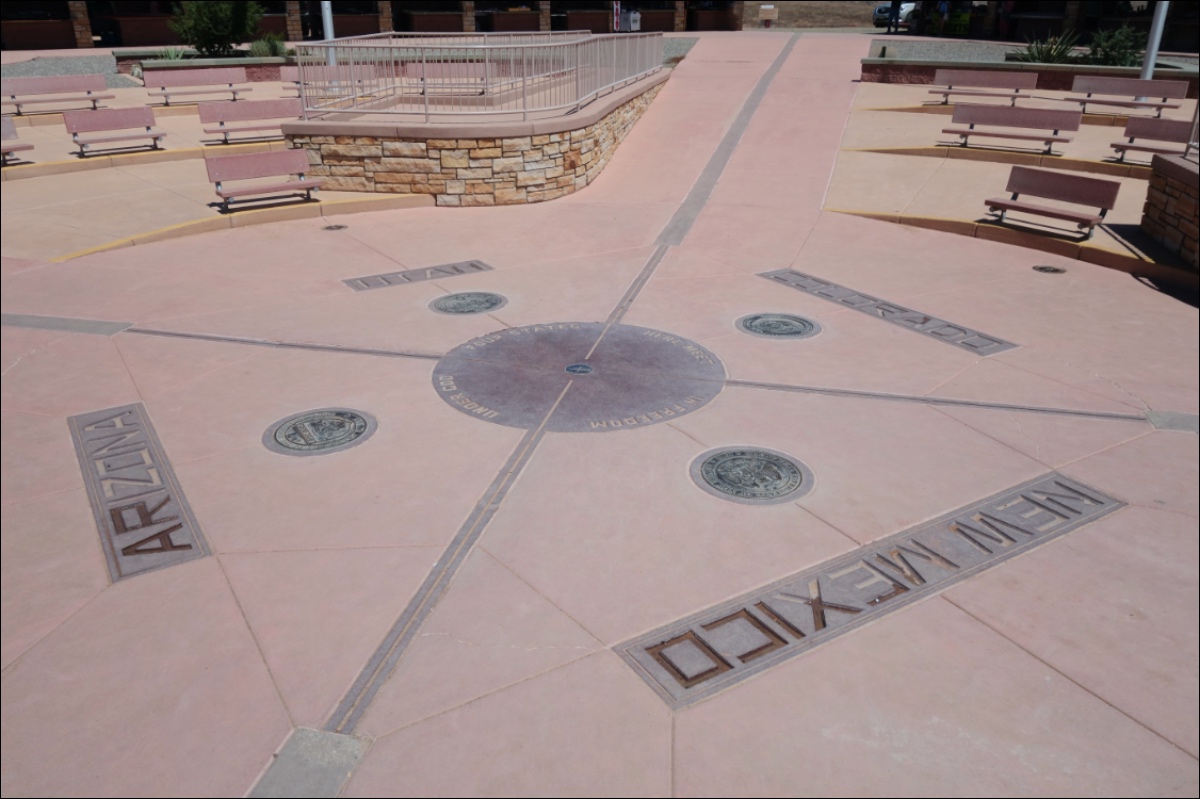
My first of many experiences traveling through the Southwest was with our family on a route from Phoenix, Arizona up to the Grand Canyon, and then over through Monument Valley to our target destination of Moab, Utah for a week of activities we had planned there. The southern return back to Phoenix took us through Four Corners Monument, where you can be physically in four different U.S. states at the same time if you spread your limbs enough to touch them at the multi-state intersection point in the center of the monument. Each member of our family took their turn contorting their body to join the “four-states-at-one-time” club. My pose was most definitely not graceful, but it got the job done.

We started our drive to Monument Valley from the town of Tusayan near the South Rim of the Grand Canyon. Our route traversed multiple highways as we drove for several hours through vast, sweeping plains with low red rock formations as far as the eye could see. The small towns we passed through typically had populations of less than 1,000 people, and the main business in these towns is typically the support structure they provide to travelers through restaurants, service stations, souvenir shops, and the like.
We arrived at the valley shortly after noon and stopped in the Visitor Center to learn some background of the area. Monument Valley, known as Tsé Biiʼ Ndzisgaii in the Navajo language, is located on the Navajo Nation Reservation and is managed as a Navajo Nation Tribal Park. For a small fee, visitors to the valley can take a self-guided tour on the 17-mile dirt road loop called Valley Drive. There are also hiking and guided Jeep tours available to areas that are inaccessible without a Navajo guide, and a motel called The View is available should you decide to stay overnight.

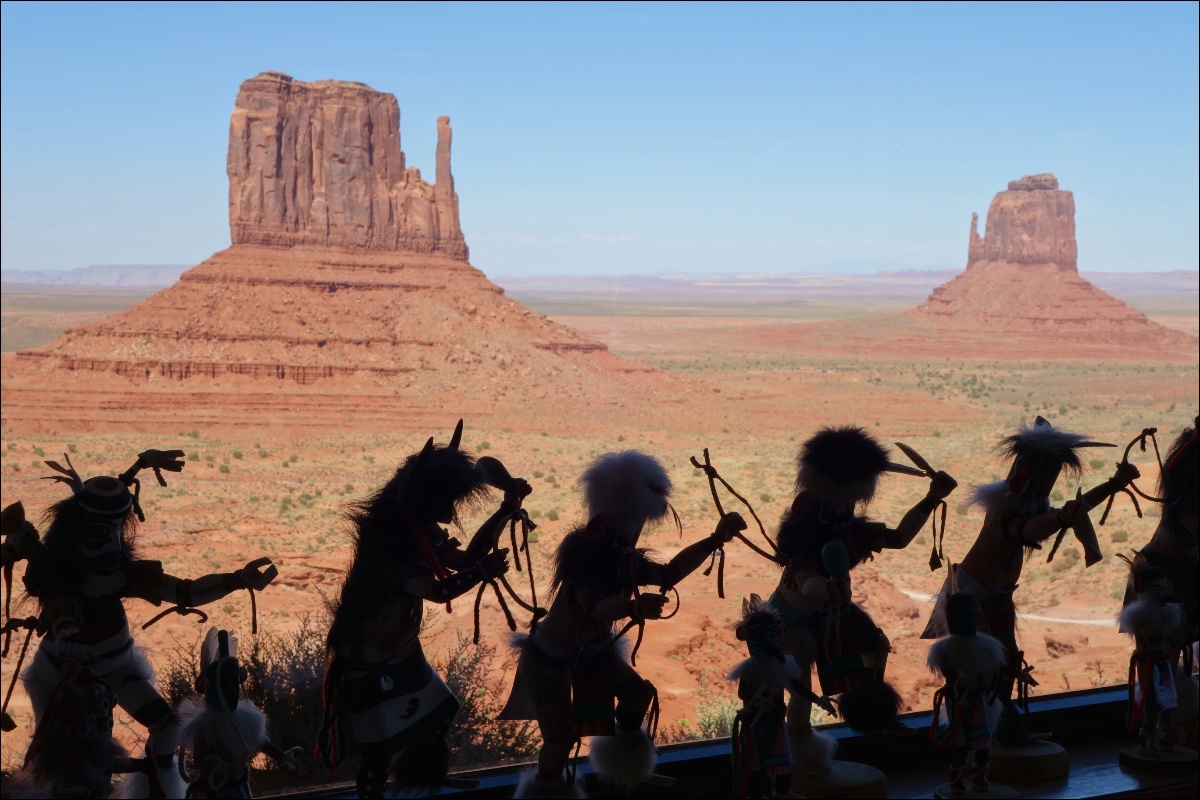
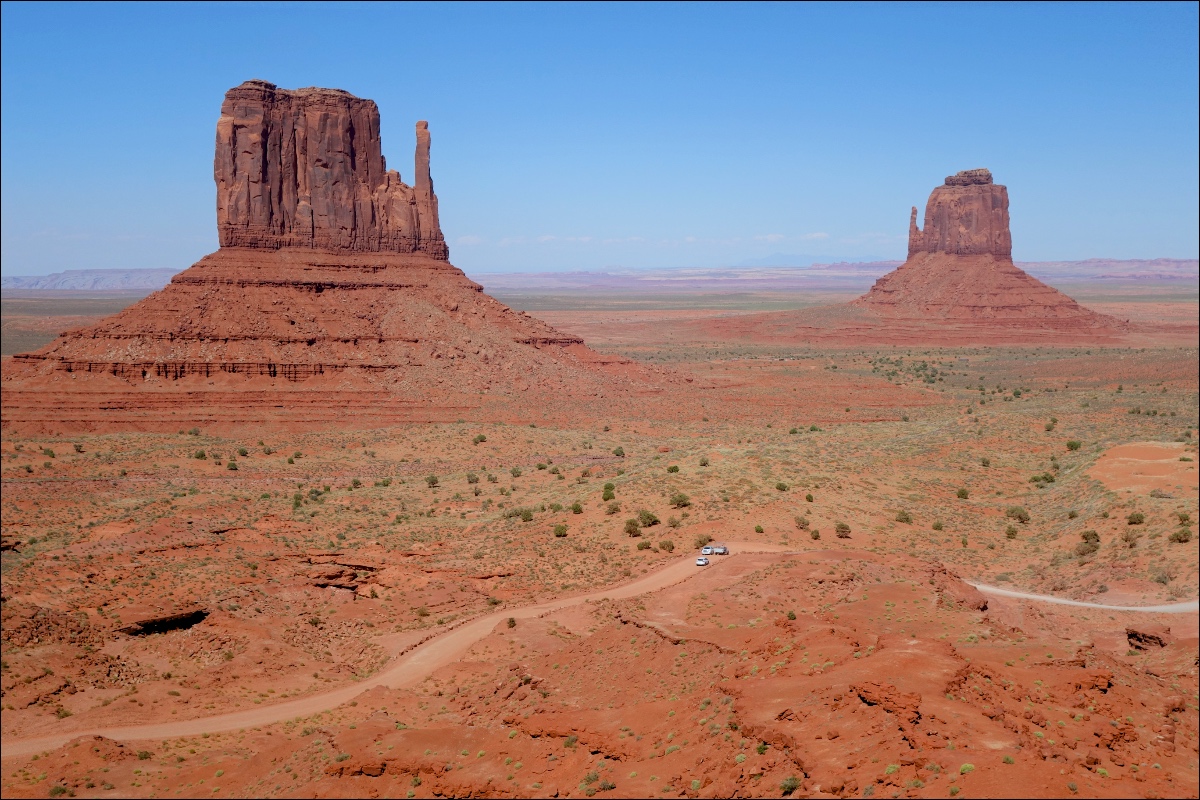
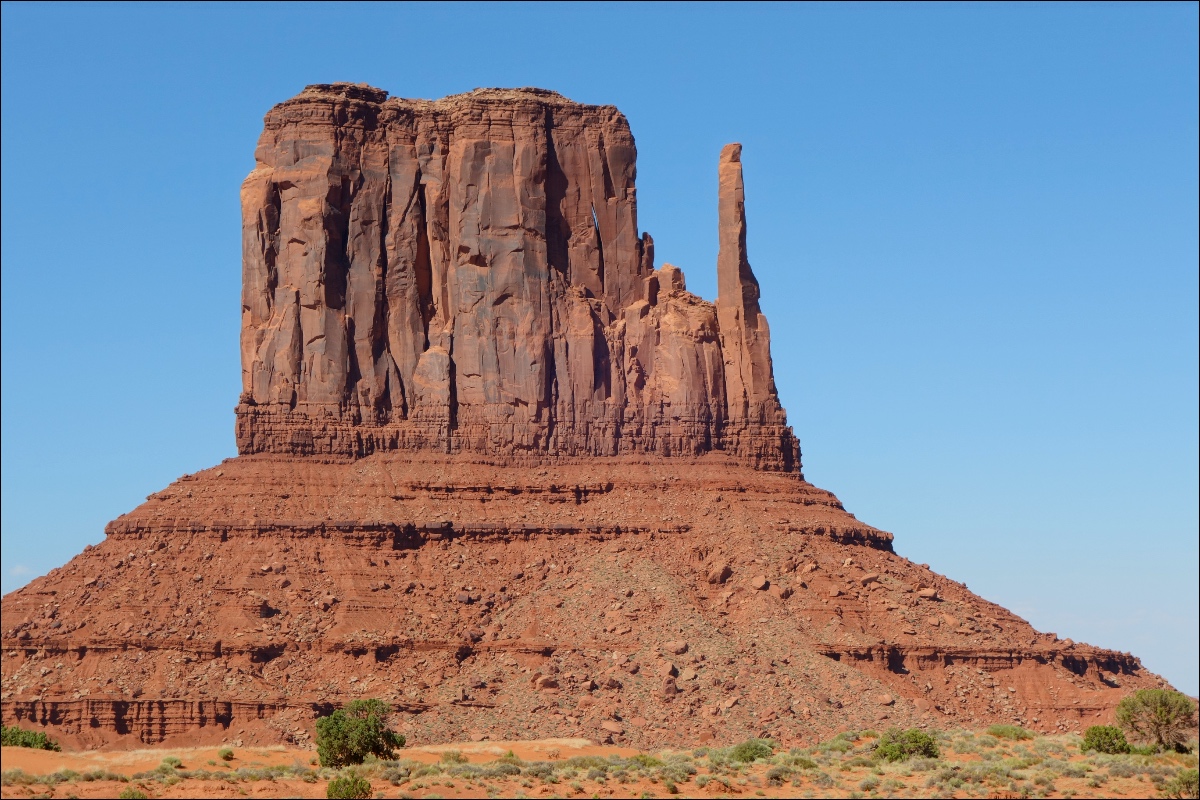
Inside the Visitor Center is a gift shop with an extensive collection of all the things you would expect like shirts, coffee mugs, home decor and other souvenirs. The shop also had an extensive array of Native American jewelry and other wares, including a collection of statues and dolls that I saw arranged on a window edge in the back of the store, almost like they were keeping watch over Monument Valley. The two buttes in the following picture are called “The Mittens” because of their unique mitten-like shape. It’s hard to imagine the coincidence of forces that shaped two separate buttes into nearly identical mirror images of each other.
The Loop
We set out on the Valley Drive loop, and quickly saw that it can be rough in spots. Driving the road during the Southwest’s monsoon season would be a challenge because it’s easy to imagine how muddy and slippery the road must get. If you’re not in a four-wheel drive vehicle at those times, then your touring would likely come to a rapid end.
I started taking the pictures you see here to capture the awe-inspiring beauty, but it’s difficult to grasp from just the photos because the sense of grandeur comes not only from the sights themselves but also from what your senses are picking up as well. The heat, wind, dryness, dust, and silence all combine to make you realize how small we are in this landscape.
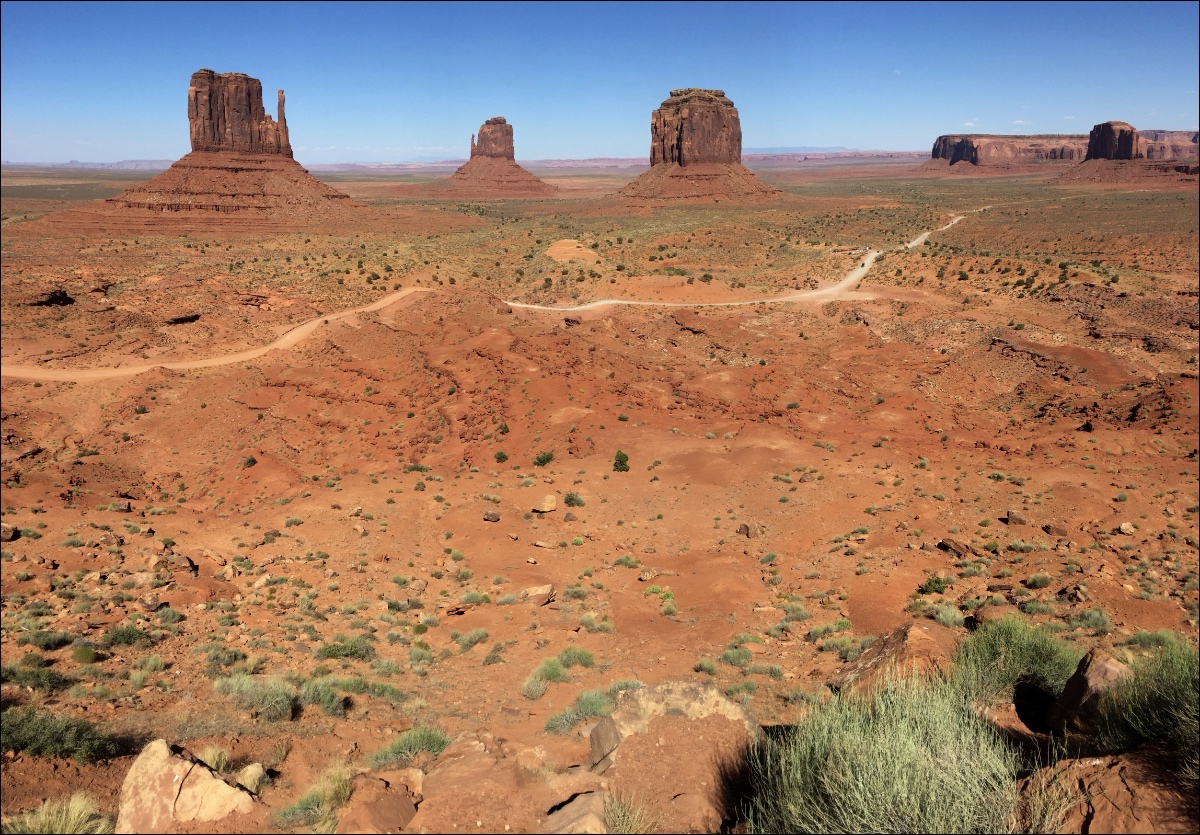
Traveling along the road, taking in the sights, we stopped at the pull-out locations to read the signs explaining what we were seeing and the names of the towering buttes around us. Our trip through Monument Valley happened before the Covid-induced National Park travel craze that has held steady since then, so we often found ourselves alone at the stops along the road. I’ll never forget the first time I turned the car off and stepped out at one of the viewing points. I heard nothing; it was total silence. The heat of the midday sun was intense. When the wind blew, you heard it whispering around you, but other than that, there was nothing.
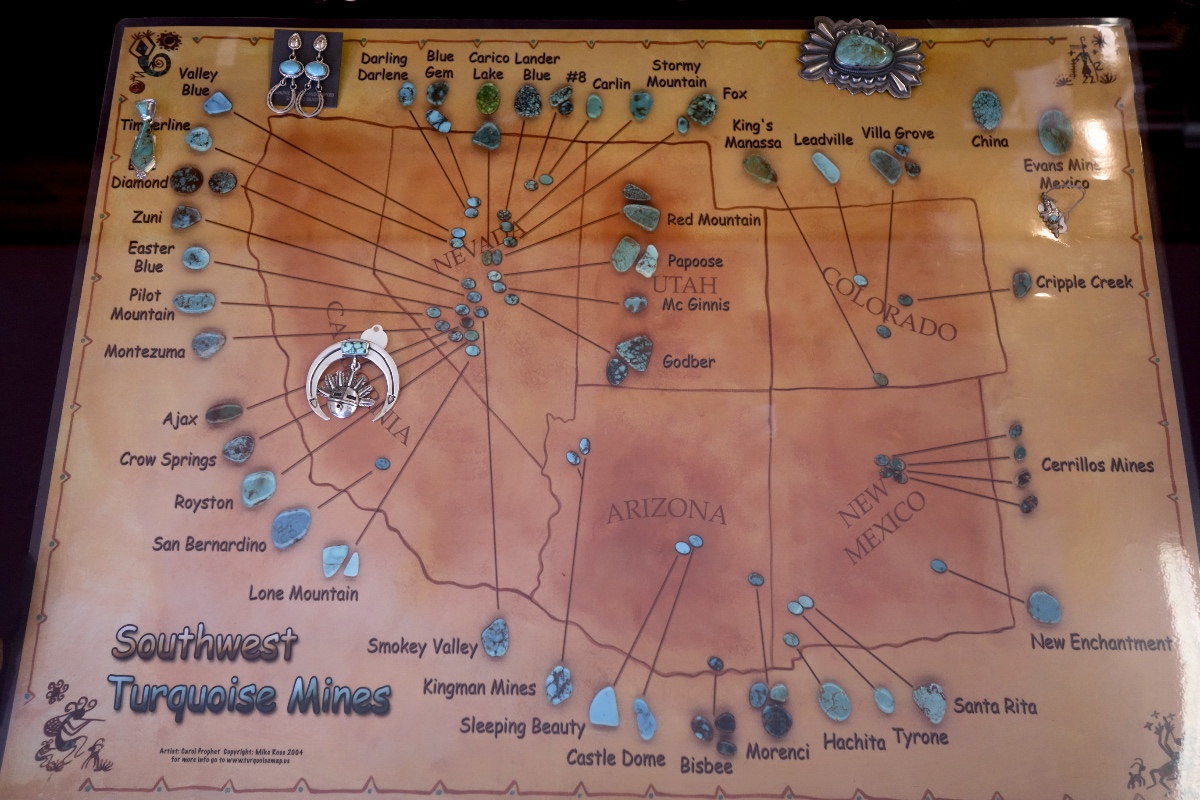
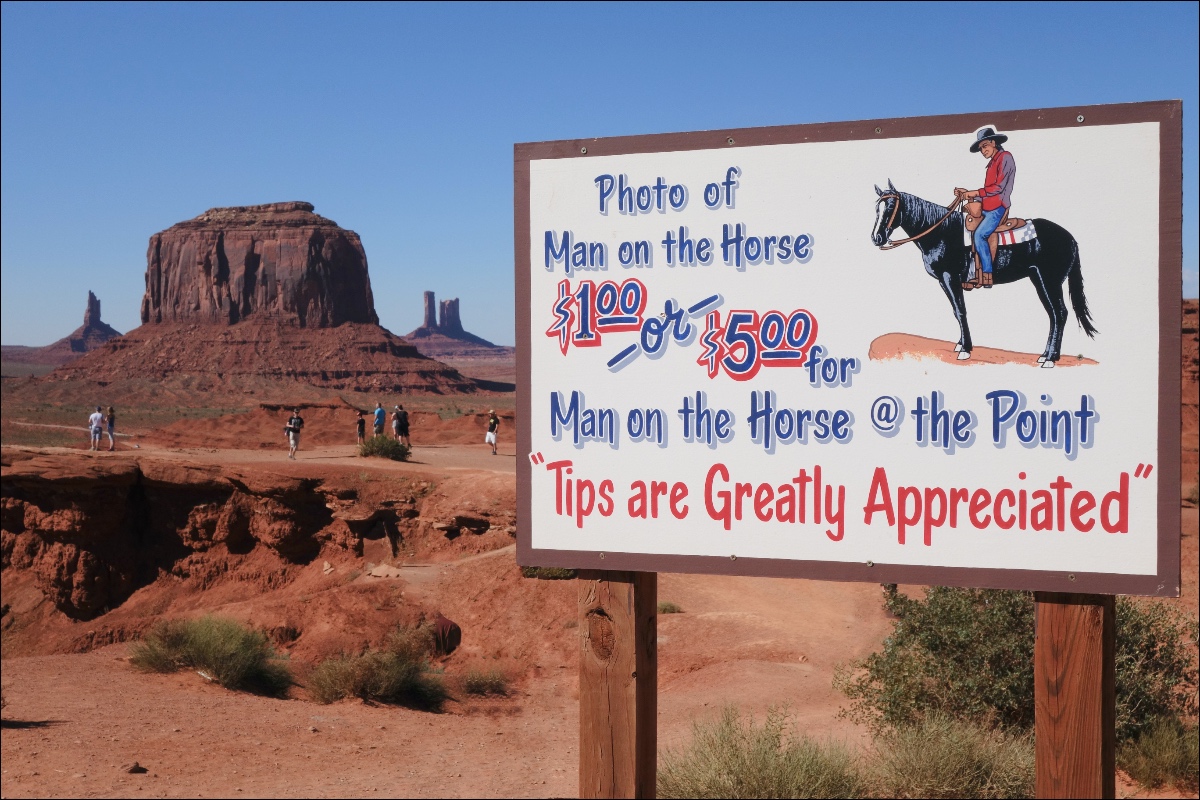
We continued on our way and eventually came across a Navajo craft stand next to one of the pull-outs. My daughter stopped to purchase a bracelet as the warm afternoon wind gently blew the dream catcher ornaments around on their strings. Turquoise stone features prominently in Native American jewelry, and I was surprised to learn from the image of the map below how many mining locations there have been (and still are) in the western United States. We also discovered at this gift stand that there’s a man there that offers visitors the opportunity to take a picture for a fee with his horse near the famous John Ford Point.

While driving through the valley, each turn of your head and pull-out on the road offers a different view of this grand place. Out where the gift stand was located, the vast scenes open up in all directions, rendering cars as small specks on the winding valley road. Going deeper into some of the corners of the valley that are more protected from the drying winds, I found scenes that included low growing shrubs and grasses holding on to whatever moisture they could get to stay green. I also saw spots where the winds blew the dust from the eroded sandstone into large dunes nestled against the buttes.
These scenes compounded my wonder of how this all came to be. I’m a curious person, so I always learn about the places I visit so I have the context of what I’m looking at. What amazed me about Monument Valley, and much of the Southwest, is that everything you see in these pictures was once under water! The valley was originally formed during the Permian period, approximately 250 to 300 million years ago. At that time, the area was covered by seas and rivers that deposited sedimentary rock, like the sandstone that forms the base of what you see there today. Tectonic activity caused the region to uplift, which displaced the water in all directions. Wind, water, and time did the rest of the work, eroding the exposed soft sandstone rock layers over millions of years into the buttes and valleys in these photos.
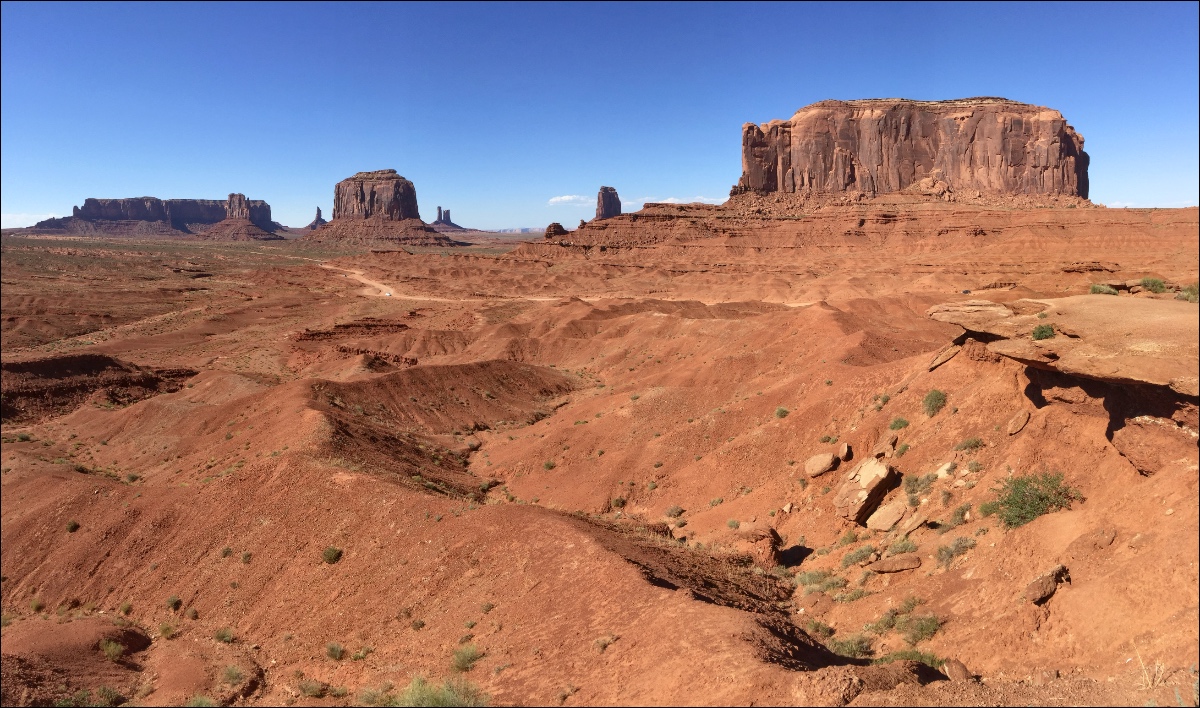


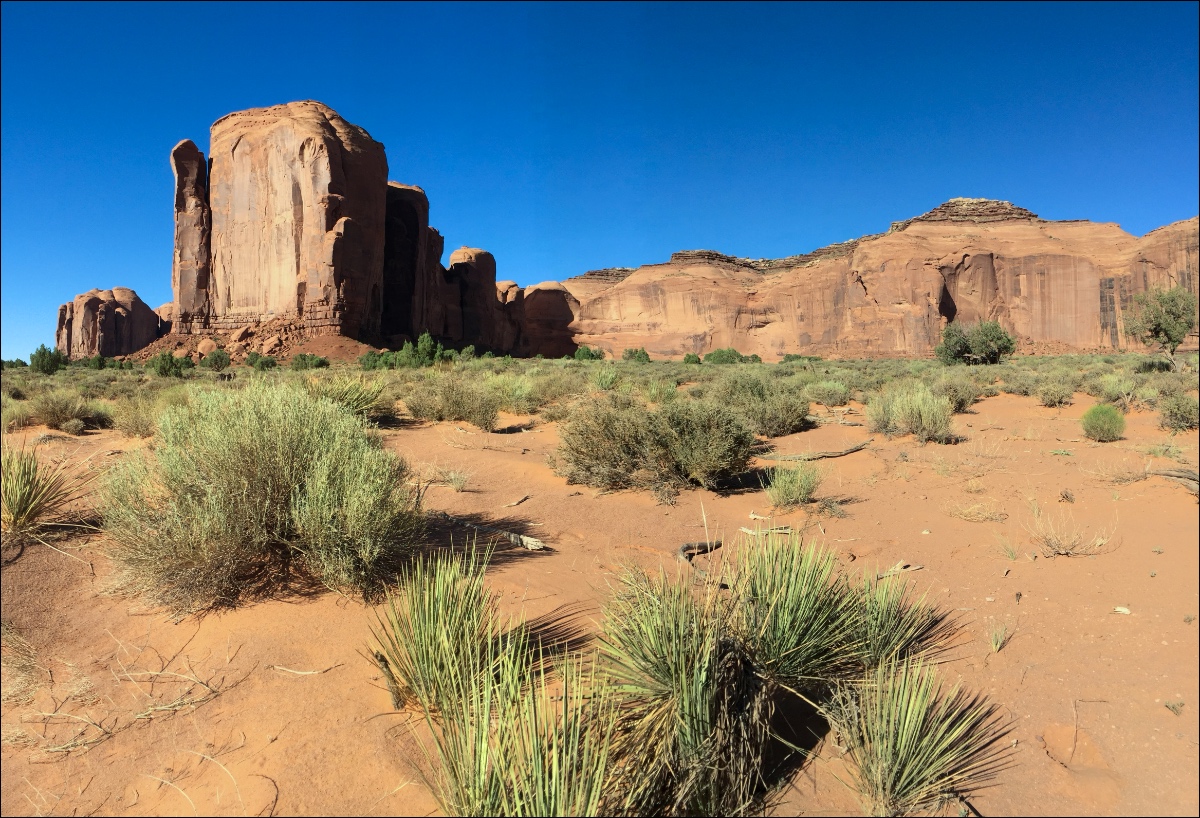
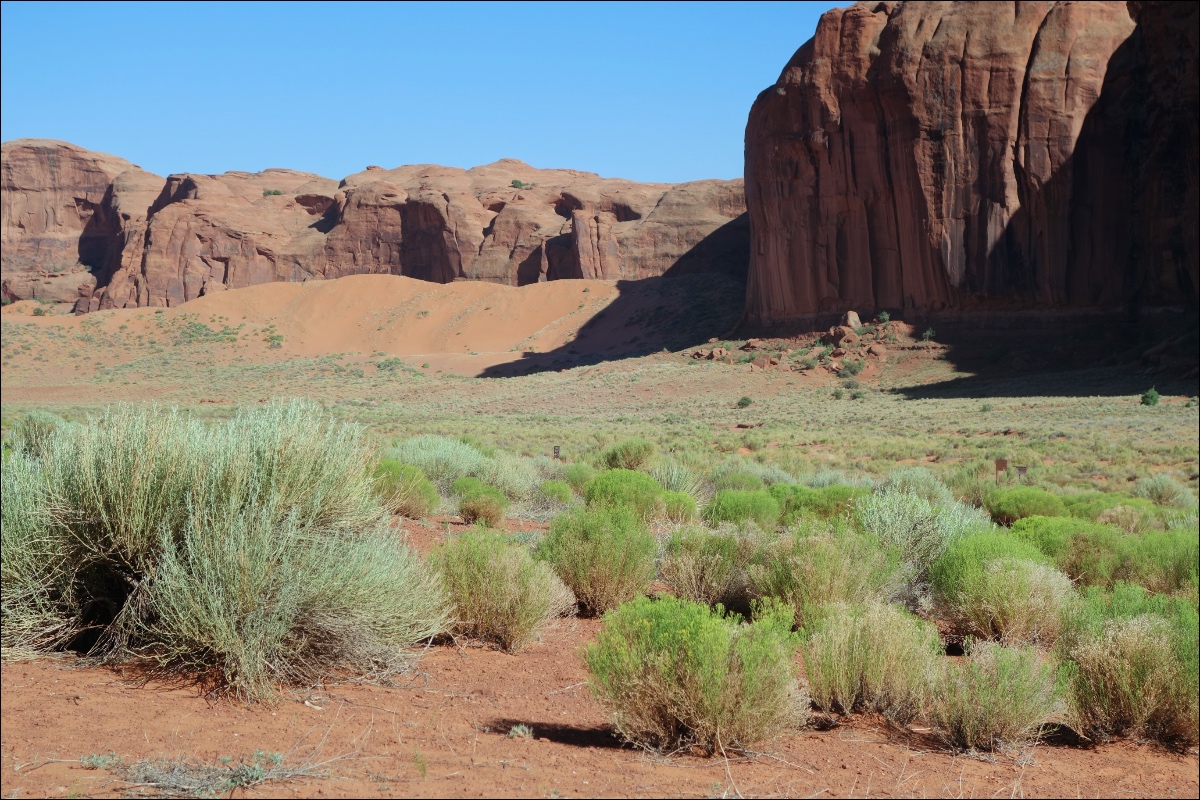
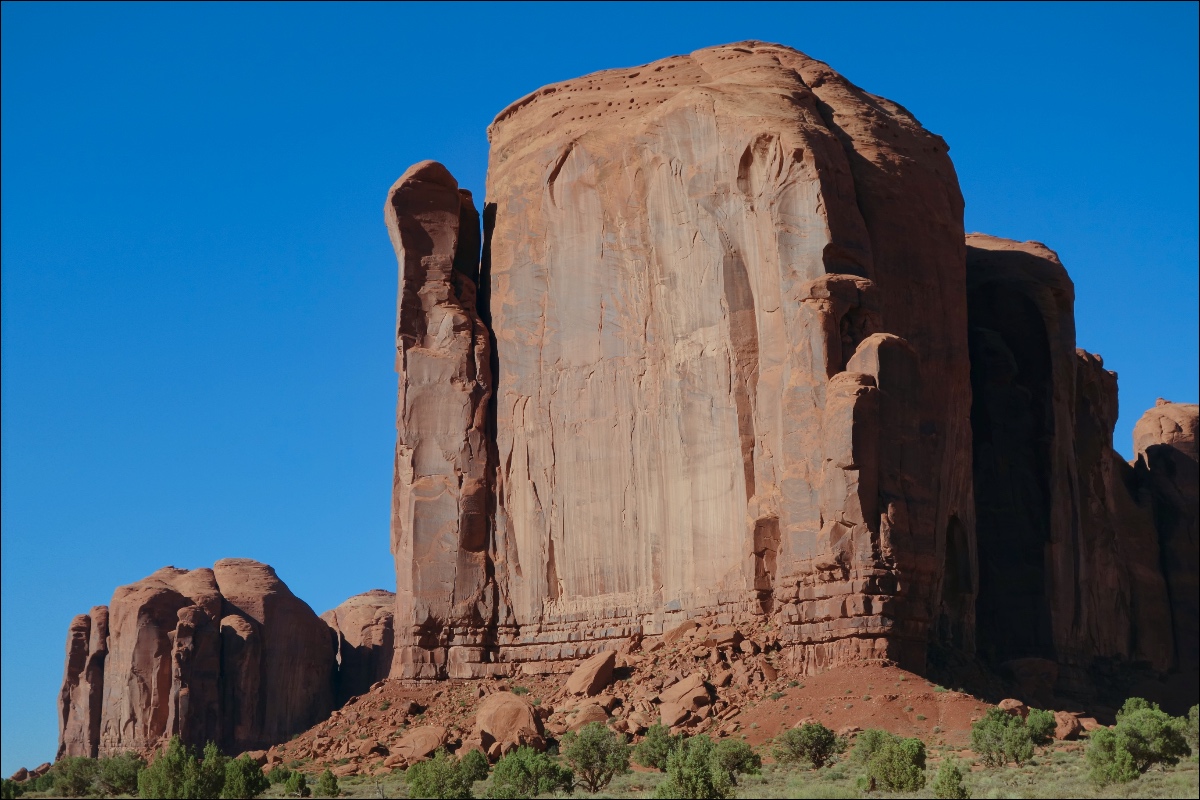
Continuing on with our journey, we could see the impact of time and harsh weather on the buttes. Around the base of most of them are piles of sandstone rock that has eroded off the faces of the buttes and crashed to the ground. In one of the photos below, you can also see the beginning of how arches are sometimes formed from these buttes as the erosion hollows them from the inside out. This is caused by water that collects on the tops of the buttes which then trickles down cracks that reach deep inside the butte. As the inner support is worn down over time by the flowing water, the outer rock layers crack and fall to the ground.


The Grit
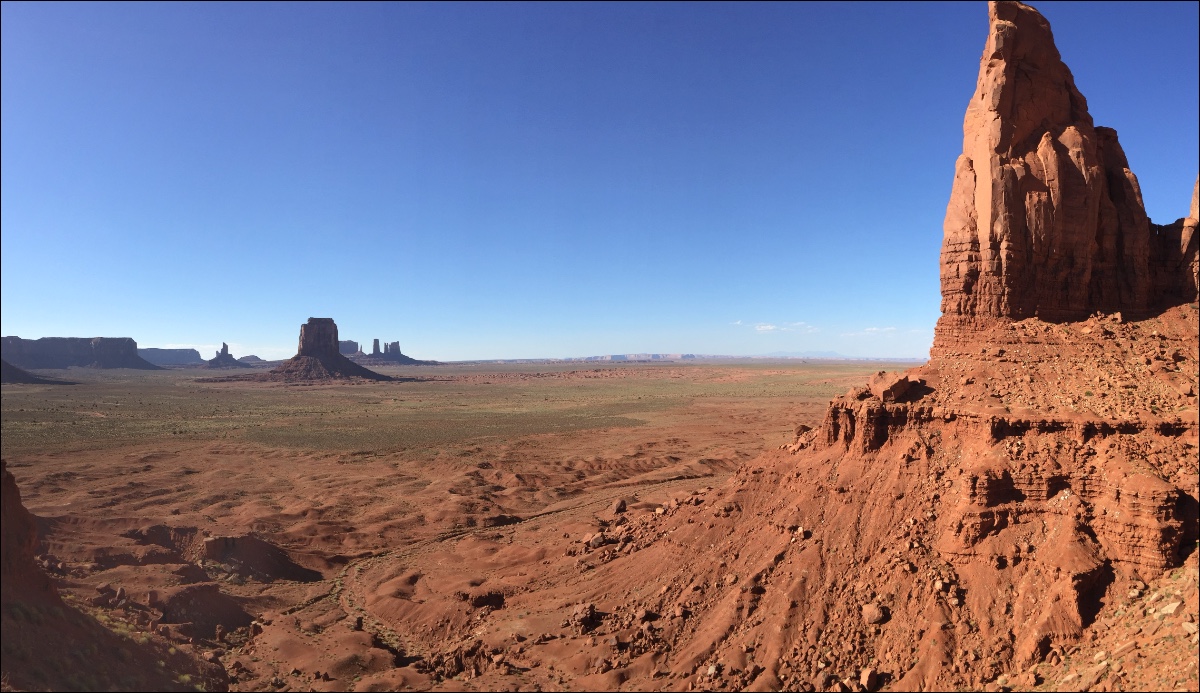
Near the end of our drive before leaving the valley, I stopped the car one last time next to a butte called Rain God Mesa to see it up close. Walking up a short path from where the car was parked, I found myself standing in silence next to the butte looking straight up at the towering monolith over my head.
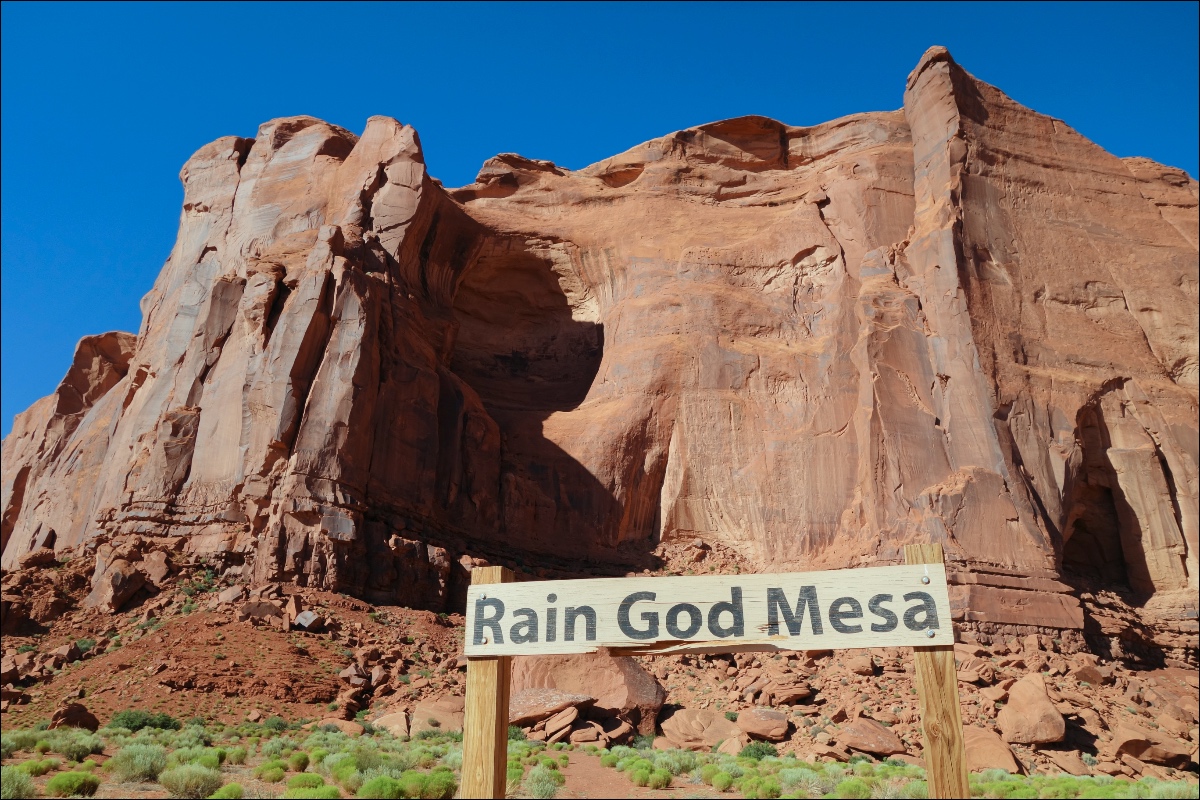
Down closer to the ground below Rain God Mesa, there was a wavy pattern in the sandstone stretching out in front of me that the wind and water etched over time. Curious as to how the sandstone would feel, I ran my hand along it and immediately thought of sandpaper. The texture was rough and abrasive.
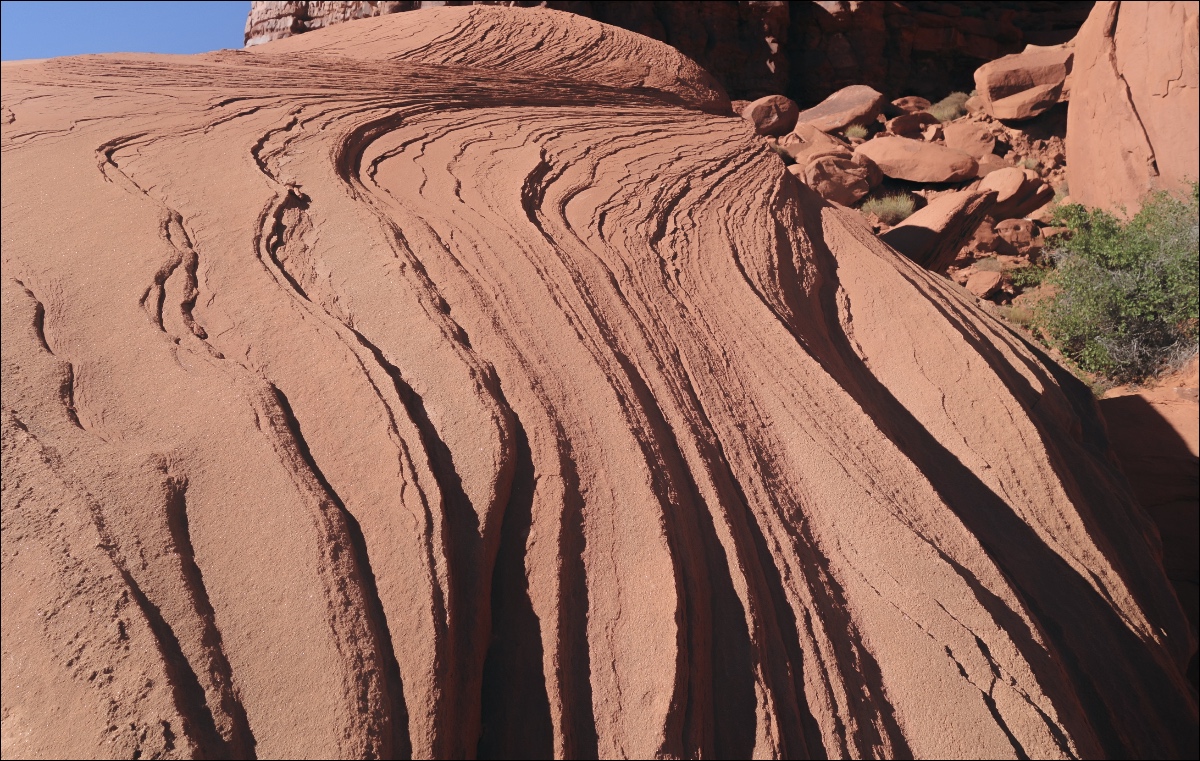
Even with just that small touch, I could feel the grit of the stone left behind on my fingers. It was in that moment, through feeling that grit and seeing how easily my fingers swept some of it away, that I truly appreciated how this place came to be. Wind and water have continuously worn immeasurably small fragments of rock away from the larger masses over millions of years, forever altering the landscape and creating the arches, buttes, slot canyons and other sculptures that we marvel at today. Someday they might be gone, and it was with that thought that I realized that I can indeed touch time. It was right there, on the tips of my fingers.
If you enjoyed this article, please Like, Share, or Forward it using the buttons below so it can reach more people who might be interested. Thanks!
 Slant On Life